Dan Stephens, MA, LPC, LMHC, NCC, CSAT
A licensed counselor who builds and evaluates AI systems for clinical settings.
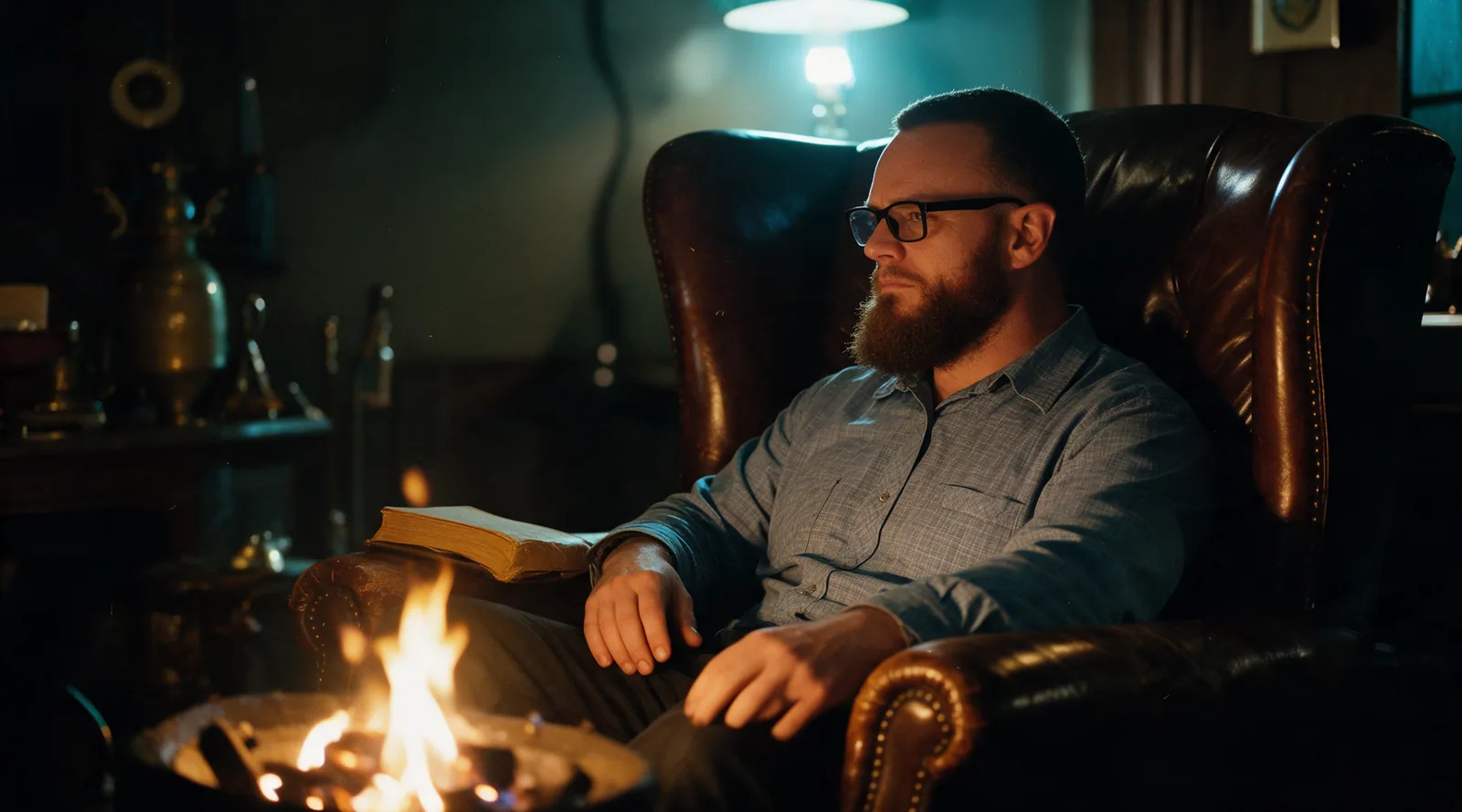
I am a licensed counselor who runs a counseling organization. I carried a caseload of twenty to twenty five sessions a week for years, and I still hold one. Separately, and only over the past year, I have been the person who decides what AI is allowed to touch in that organization and who writes the checks that decide whether its output is allowed out. Having done the clinical work first and the AI work second is the point: I can put clinical judgment into a product requirement without losing either side of it.
The things I have actually built are catalogued in the AI work portfolio, one page each, with what was built, what state it is in, and what it has not yet proven.
Licenses and certifications
- Licensed Professional Counselor, Arizona, 2021 to present, with Clinical Supervisor authorization, 2024 to present
- Licensed Mental Health Counselor, Washington, 2019 to present
- Licensed Professional Counselor, Oregon, 2025 to present
- National Certified Counselor, 2016 to present
- Certified Sex Addiction Therapist, 2022 to present
Restored Life Counseling
Founder, Executive Director and Clinical Director. Glendale, Arizona, with clinicians in Arizona and Washington. January 2018 to present.
I founded and lead a multi-state nonprofit counseling organization. I am board president and the clinical supervisor of record for three clinical contractors. Revenue is up nearly twenty percent on a trailing twelve months, and it rose while I was deliberately lowering my own caseload ceiling to spend more of my hours leading the organization, which is the harder way to grow. My clinical specialization is sex and pornography addiction, betrayal trauma, infidelity, and therapeutic disclosure.
Checking what the AI writes
We publish healthcare marketing content, and the risk in that is a claim resting on a citation nobody checked. A hallucinated reference in public writing is a credibility problem and, in healthcare, a regulatory one.
I built the gate that decides whether a piece is allowed out. I built it after handing that job to a commercial AI judge first and then auditing the judge. In its first real audit it flagged nineteen citations and was wrong nineteen times. Across a batch of fourteen documents it raised roughly 359 objections, none of which survived checking, while passing every one of the five real errors as clean. The replacement is mechanical rather than a matter of judgment. It resolves every reference, matches every cited name against that source’s author list, costs nothing to run, and it caught all five.
I also wrote the hostile-review step that runs before anything outward-facing publishes: readers briefed to attack every dated or countable claim, each one checked against an original source, one recorded verdict apiece. The first real run examined 27 claims, caught 2 factual errors, and reworded 10 places where a claim had outrun its evidence.
Together those two steps are what make it possible to publish grounded healthcare content at a pace one person could not otherwise sustain, and to do it semi-programmatically. A person still reads and signs before anything goes out. That step has never been automated and will not be.
The corpus those gates were proved against is the set of short literature reviews behind our screening-instrument rebuild: thirteen reviews and twenty six finished documents, about 165,000 words. That build is on hold until we have a green light from a university review board.
Measurement and outcomes
I designed the Personal Challenges Survey and have fielded it since 2018: a self-report screener under fifteen minutes covering depression, anxiety, suicide risk, adverse childhood experiences, and problematic sexual behavior, with crisis-referral thresholds and a non-diagnostic design.
It began as a way to reach people who would not otherwise walk in, and what it turned into was an appetite to do the research properly. We are winding the current instrument down and seeking a university review board partnership. Nothing collected the way we collected it is publishable.
Building the organization
Bylaws, a provider manual, business associate agreements, and a records-retention policy. Quarterly board governance as president.
Clineo LLC
Founder. Phoenix metro, Arizona. 2026 to present. A managed-services agency for small healthcare practices, built to handle patient information properly. Disclosed as an outside interest, with scope to be aligned to an employer’s interests at offer.
Earlier
- Adjunct Instructor in Psychology, Warner Pacific University, January to May 2020
- Mental Health Counselor, Refresh Therapy, Vancouver, Washington, 2017
- Mental Health Counselor, Real Life Counseling, Vancouver, Washington, 2016 to 2017, and intern counselor there from 2014
Education
- Graduate Certificate in Missional Theology, Missional Training Center, Tempe, Arizona, 2026
- MA, Counseling, Western Seminary, Portland, Oregon, 2016
- BS, Psychology, Washington State University Vancouver, 2012
Also
I am designing a three-part continuing-education curriculum on AI ethics for counselors, with a provider application in development, including a reading of Arizona’s behavioral-health continuing-education rules.
Getting in touch
Use the contact page. For counseling or clinical supervision, click here for a consultation.